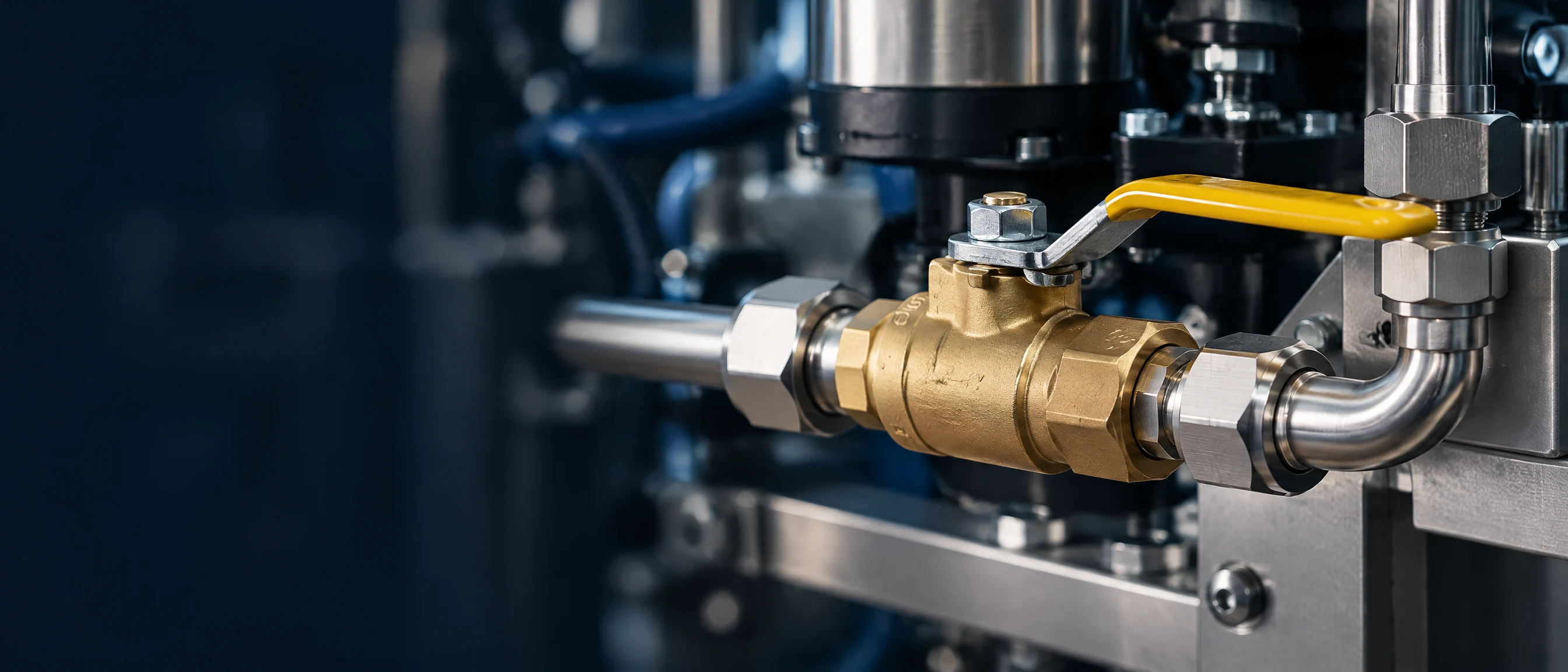
Brass quarter-turn ball valve installed within an industrial fluid-control assembly

Standard solutions

Ball Valves

Made in the USA · ISO 9001 quality system

For fuel, coolant, hydraulic, and pneumatic systems, Anderson Brass ball valves combine positive shut-off, durable forged-brass construction, and a stem seal designed to stay tight without adjustment.

Start with the application

Choose the flow path, pressure, and footprint.

The right ball valve begins with what the system needs to control. Start with a proven series, then work with our team on connection, material, handle, or dimensional changes when the application calls for something different.

  • Flow pathIn-line, 90-degree angle, or 3-way routing for shut-off and diversion.
  • Working pressureSeries-specific pressure ratings for water, oil, gas, steam, and directional service.
  • Available spaceCompact forged-brass bodies and angle configurations for constrained equipment layouts.

Series guide · three proven starting points

Select by what the valve needs to do.

Each Kantleak™ series brings the same focus on durable sealing and smooth quarter-turn operation, with a different flow path and pressure profile.

01 / 03
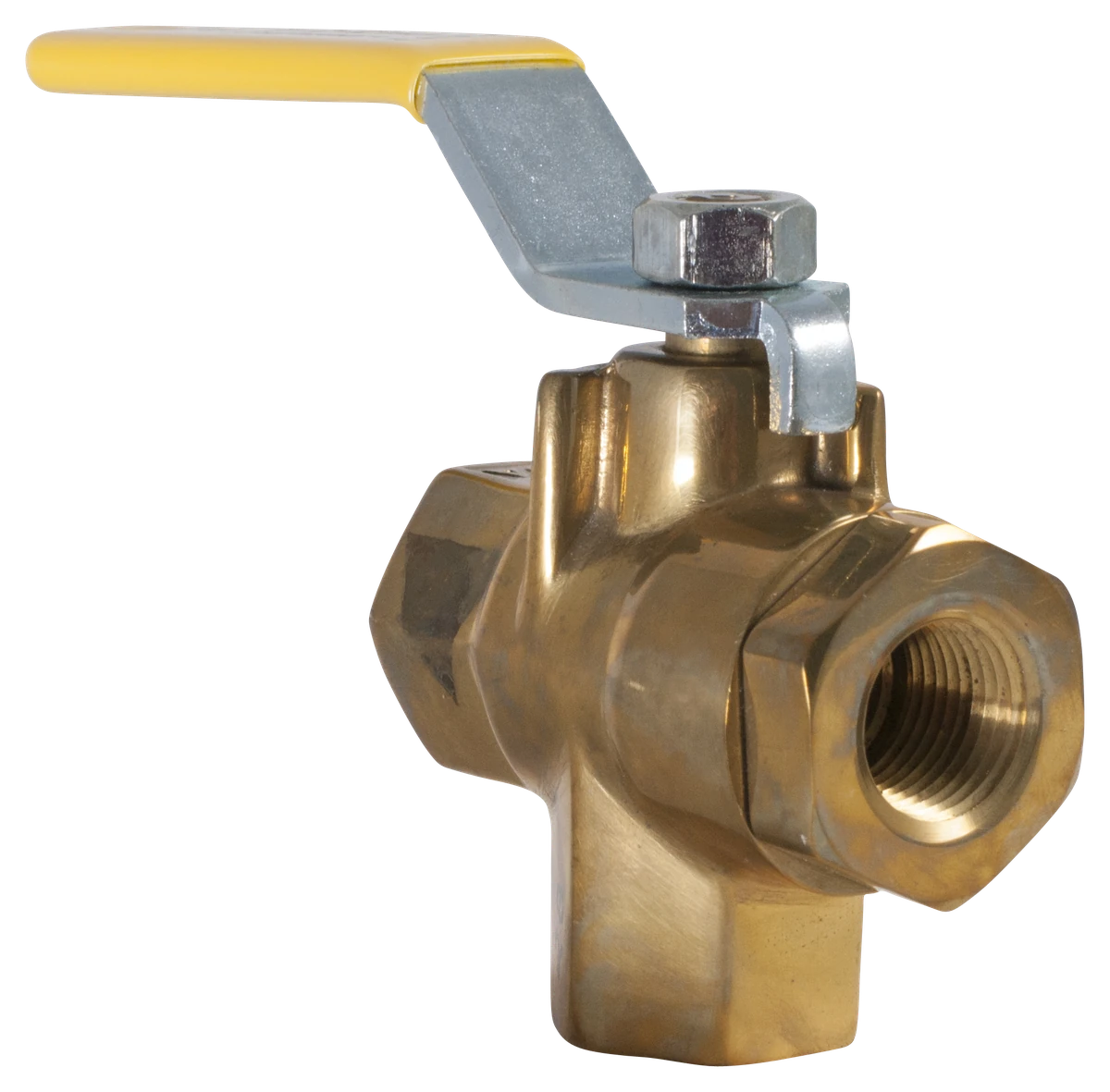
120BV Series brass 3-way ball valve with yellow handle

3-way directional control

120BV Series

Routes flow between a bottom inlet and two side ports.

Pressure500 PSI bottom · 100 PSI sideSizes1/4″ · 3/8″ · 1/2″ FNPT
View 120BV Series
02 / 03
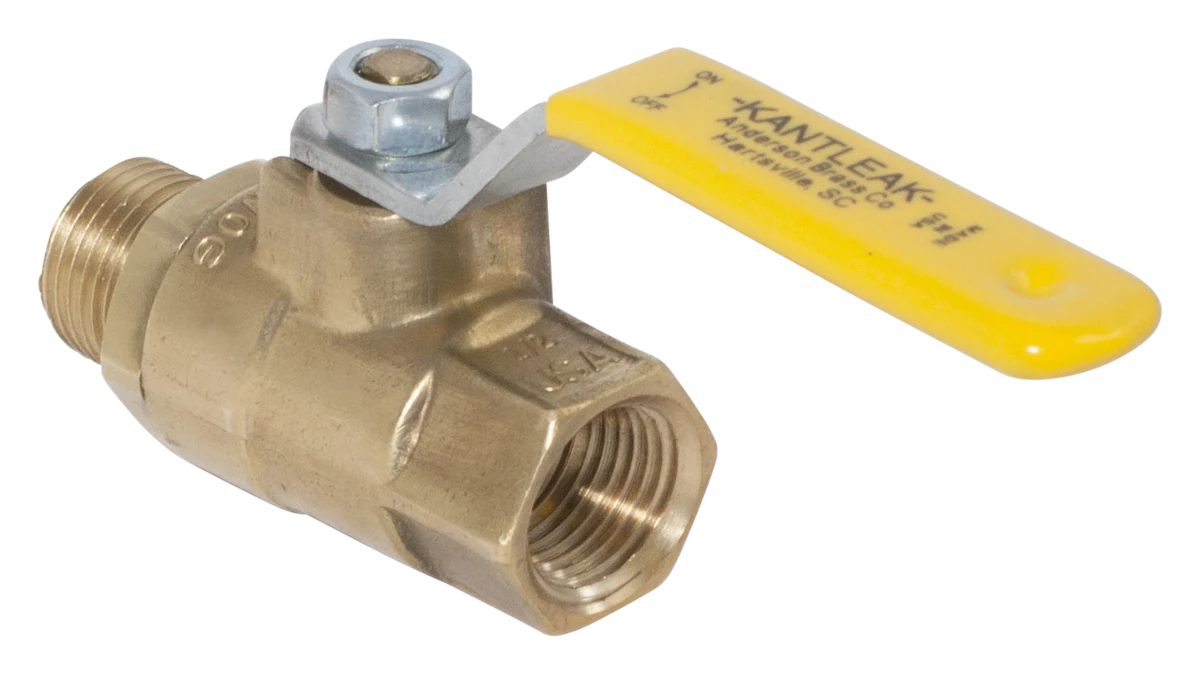
162BV Series brass 2-way in-line ball valve with yellow handle

2-way in-line shut-off

162BV Series

Straight-through, quarter-turn isolation for demanding service.
Pressure600 PSI WOG · 150 PSI steamSizes1/4″ through 1″ FNPT
View 162BV Series
03 / 03
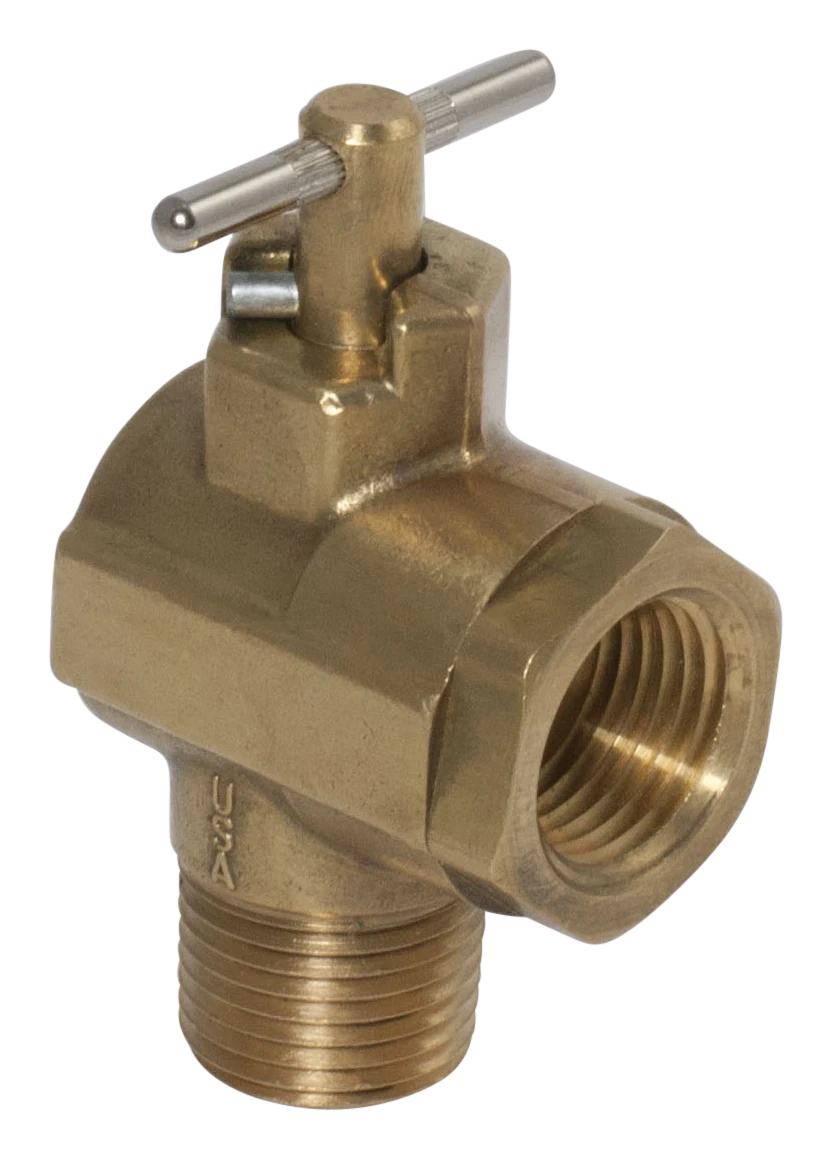
190BV Series brass 2-way 90-degree angle ball valve

2-way 90° angle shut-off

190BV Series

Turns the flow path where equipment space is constrained.

Pressure600 PSI bottom · 100 PSI sideSizes1/4″ · 3/8″ · 1/2″ FNPT × MNPT
View 190BV Series

Why Anderson Brass

Proven sealing. Practical engineering.

A standard part should still feel considered. Kantleak™ ball valves pair durable materials with a sealing system built to reduce maintenance, backed by engineers and manufacturing teams working under one roof.

Sealing that stays set

Double O-ring protection and an exclusive stem seal designed to operate without periodic tightening.

Materials made for work

Forged brass CDA 377 bodies, chrome-plated brass balls, blow-out-proof stems, and easy-turn handles.

One-roof flexibility

Engineering, machining, testing, and assembly stay close when a standard valve needs a practical modification.

Where ball valves work

Find the right starting point.

Browse by the job the valve needs to perform or by the equipment environment around it.

Related resources

More practical reading on ball valves.

Product detail, selection context, and application guidance from Anderson Brass.
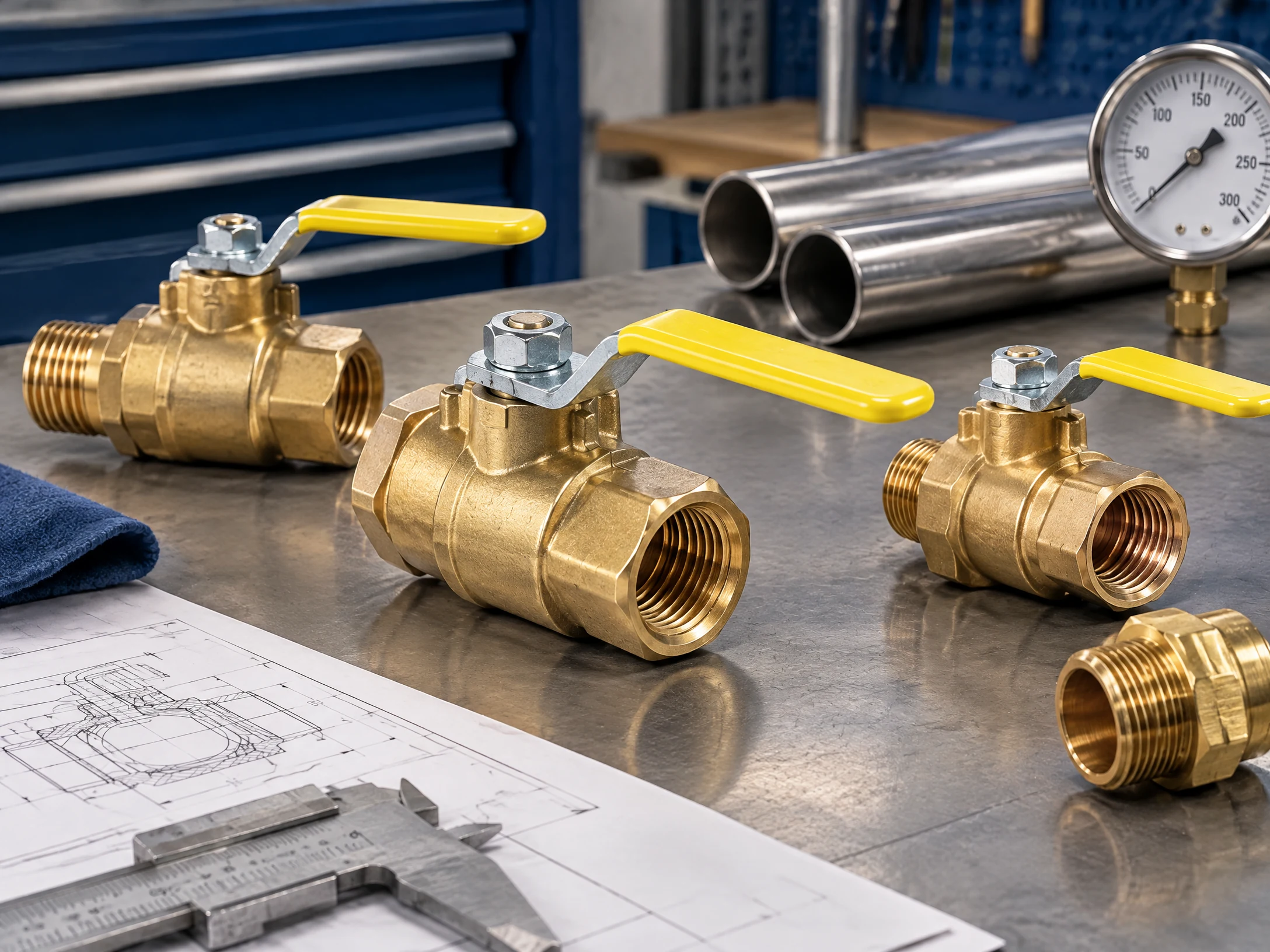
Brass ball valves arranged with a pressure gauge and engineering tools
Application guide · 2 min read

Industrial ball valves: matching pressure, footprint, and flow path

An overview of compact, high-pressure, refrigerant, and multi-port ball-valve options.

Read article →
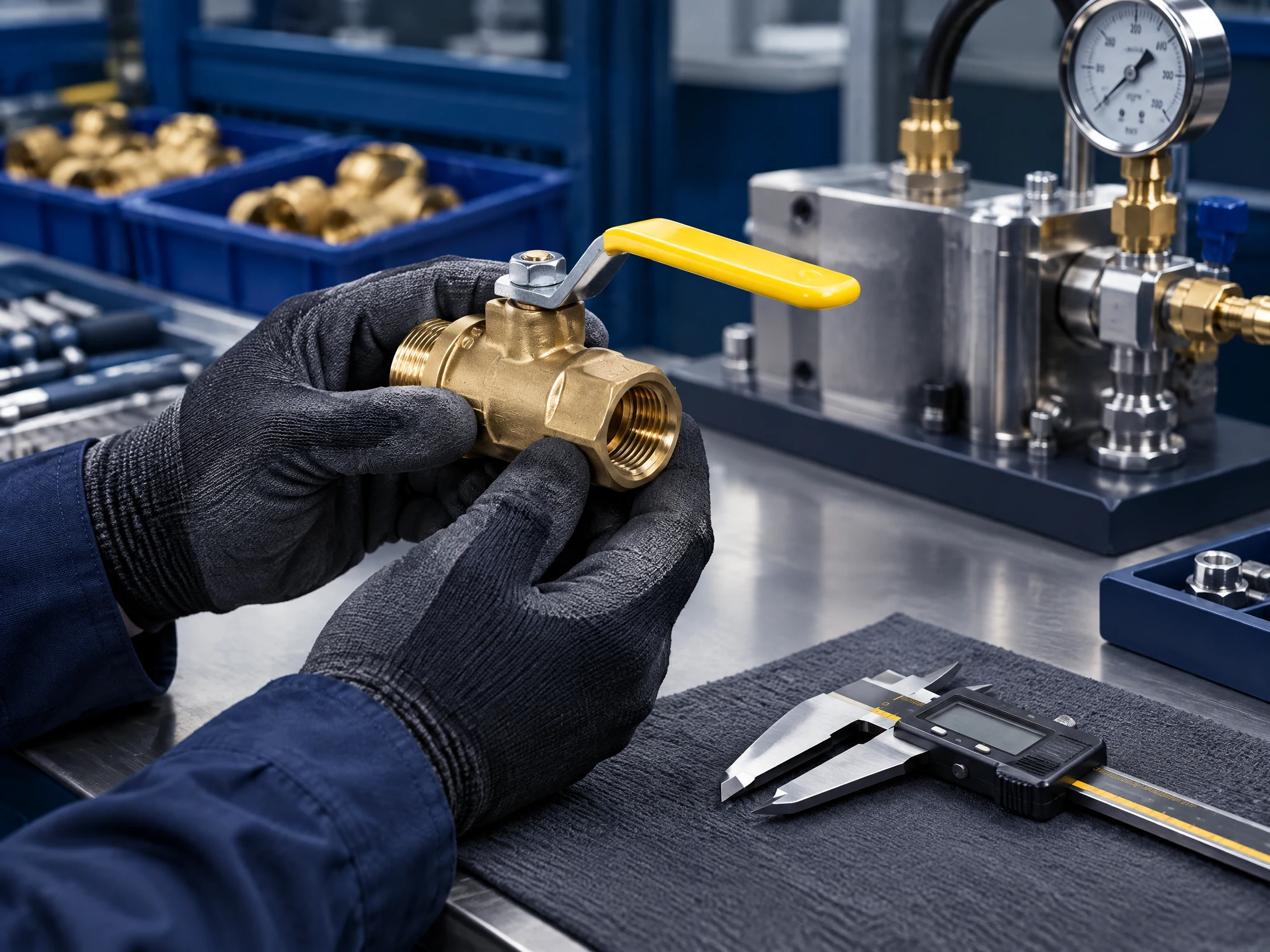
Technician inspecting a brass ball valve beside a pressure test fixture
Product spotlight · 2 min read

Inside the Kantleak™ 162BV Series

How double O-ring protection, premium materials, and a blow-out-proof stem support dependable shut-off.

Read article →
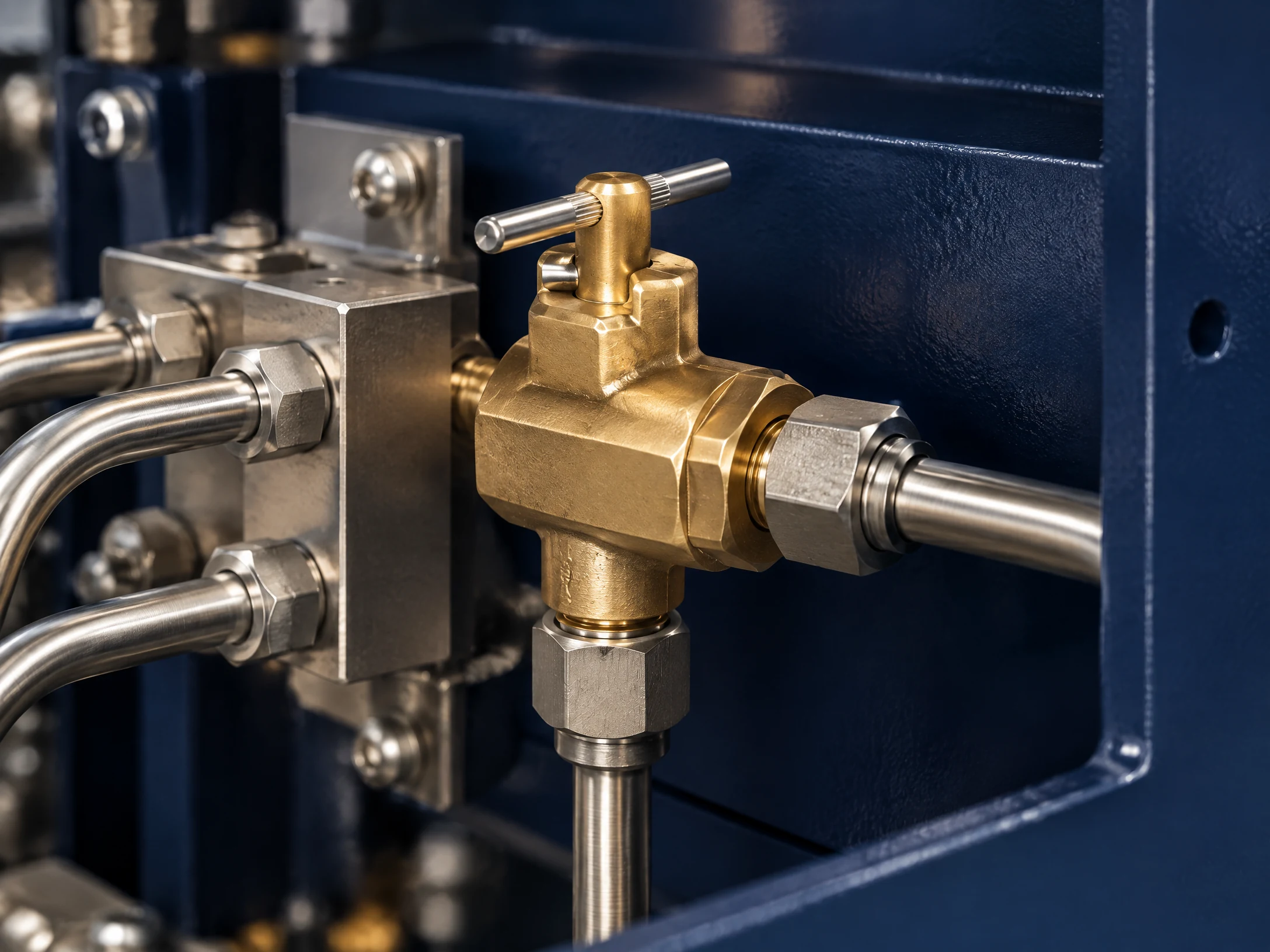
Brass 90-degree angle valve installed in a compact equipment enclosure
Product spotlight · 2 min read

Why angle flow matters in the 190BV Series

A closer look at the compact 90-degree flow path, working pressures, and available port sizes.

Read article →

Category FAQ

Questions before you specify.

The fastest route to the right valve is a clear picture of the media, pressure, connections, flow path, and available space.

What is the difference between a ball valve and a check valve?
A ball valve uses a manually operated quarter-turn ball to start, stop, or route flow. A check valve operates automatically to allow flow in one direction and prevent reverse flow. The right choice depends on whether the system needs active control or automatic backflow protection.
Which series should I start with?
Start with the required flow path: 162BV for in-line 2-way shut-off, 190BV for a 2-way 90-degree path, or 120BV for 3-way routing. Then confirm pressure, media, port size, connection type, and packaging space.
Do you offer modified or custom configurations?
Yes. Anderson Brass can evaluate changes to materials, dimensions, connections, handles, and related features, or work with your team on a custom flow-control solution when a catalog configuration is not the right fit.
What lead time should I expect?
Lead time depends on the series, quantity, current availability, and whether the valve is standard, modified, or custom. Share the application and required delivery window with our team for an accurate recommendation and schedule.

Bring us the application

Let’s create the right ball valve.

Start with a proven series or talk through the pressure, media, flow path, connections, and space constraints with our team.

The ball-valve configurator will be connected in the production build.